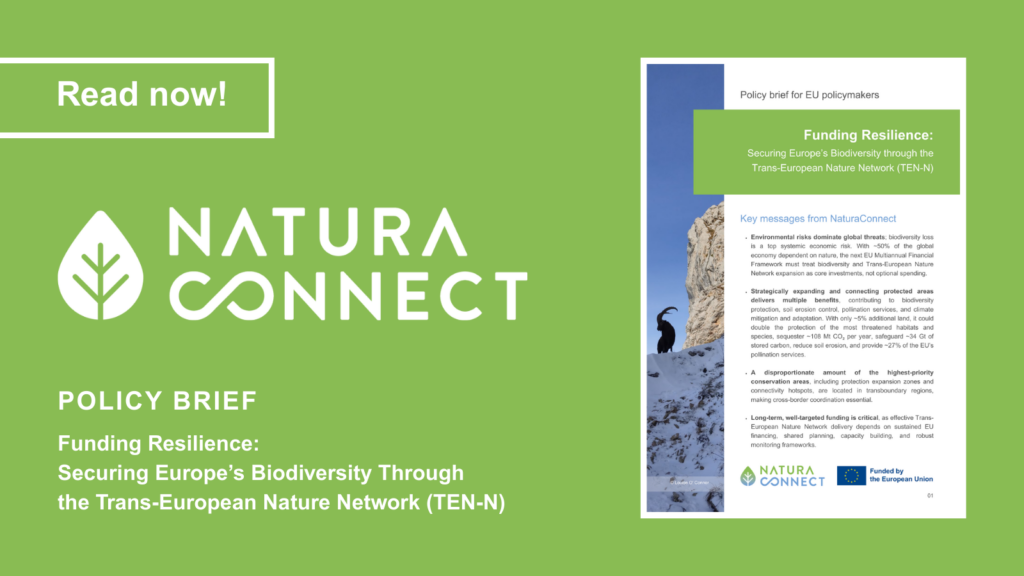
Funding Resilience: Securing Europe’s Biodiversity Through the Trans-European Nature Network (TEN-N)
Biodiversity loss is no longer just an environmental concern – it’s a systemic economic threat. With half of the global economy relying on nature, the next EU Multiannual Financial Framework must prioritise biodiversity and the Trans-European Nature Network (TEN-N) as essential investments, not optional expenditures.
Why TEN-N Matters
- Strategically expanding and connecting protected areas delivers multiple benefits:
- Doubling protection for the most threatened habitats and species with just 5% more land.
- Climate mitigation – sequestering ~108 million tonnes of CO₂ annually and safeguarding ~34 gigatonnes of stored carbon.
- Economic resilience – providing ~27% of the EU’s pollination services and reducing soil erosion.
Cross-Border Collaboration is Key
Many of the highest-priority conservation zones – including expansion areas and connectivity hotspots – are transboundary. Effective action requires shared planning, capacity building, and robust monitoring across borders.
Long-term, well-targeted funding is critical. The EU must ensure sustained financing to deliver TEN-N’s full potential – protecting nature, securing livelihoods, and building climate resilience.
A Trans-European Nature Network is not a luxury. It is a prerequisite for delivering on the EU’s Biodiversity Strategy 2030. The Multiannual Financial Framework must provide the architecture for sustained, strategic investment in nature. When TEN-N is sufficiently funded and implemented, every euro spent on nature protection works harder; protected areas deliver more, and Europe’s biodiversity has a genuine chance to recover. – Carla Freund, International Institute for Applied Systems Analysis.
Dive deeper. Read the full policy brief: